

Table ronde publique – IA et propagande politique : outils, réseaux et influence, le 21 avril, 18h00, salle Slaveykov
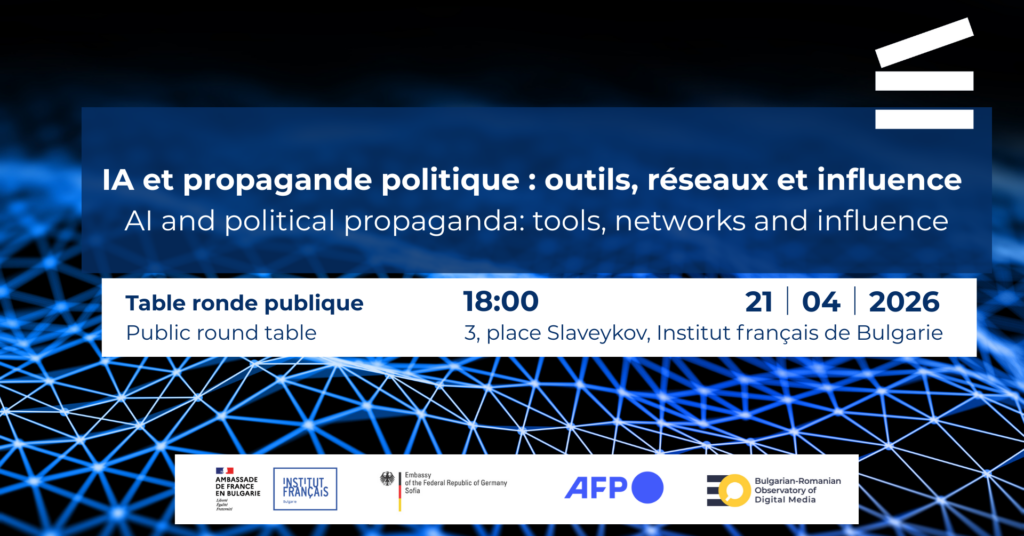
Table ronde publique – IA et propagande politique : outils, réseaux et influence
Le 21 avril, 18h00, salle Slaveykov
Langue de l’événement : anglais
Entrée libre sur inscription : https://forms.gle/LPQBjRr5HQb6Fnnp9
L’Ambassade de France, l’Institut français de Bulgarie et l’Ambassade de la République fédérale d’Allemagne vous invitent à une table ronde consacrée à l’usage de l’intelligence artificielle dans les pratiques contemporaines de propagande politique.
À l’heure où les contenus synthétiques, les logiques d’amplification et les stratégies d’influence reconfigurent l’espace médiatique et rendent l’environnement informationnel toujours plus saturé, instable et manipulable, cette rencontre posera plusieurs questions essentielles : comment l’intelligence artificielle transforme-t-elle les formes et les usages de la propagande politique ? Comment ces contenus circulent-ils à travers les réseaux et les plateformes ? Et quels effets ont-ils sur le débat public ?
La discussion réunira le consultant en communication politique Dr Johannes Hillje, le data scientist Nikola Tulechki et la journaliste d’investigation Maya Dimitrova, sous la modération de Mimi Shishkova-Petrova.
Pour ouvrir la soirée et en élargir les perspectives, le nouveau documentaire de Maya Dimitrova permettra d’interroger la place croissante de l’intelligence artificielle dans certaines formes contemporaines de communication et d’influence politiques dans son pays. Rossen Bossev et Isabelle Wirth, de l’Agence France-Presse, présenteront ensuite des outils et techniques de vérification.
Cet événement, ouvert à tous les publics, s’inscrit dans le cadre du projet régional « Renforcement démocratique des médias en mer Noire », soutenu par le ministère de l’Europe et des Affaires étrangères et mis en œuvre en partenariat avec l’Agence France-Presse (AFP), avec le soutien de l’Observatoire bulgaro-roumain des médias numériques BROD.
INTERVENANTS :
Dr Johannes Hillje
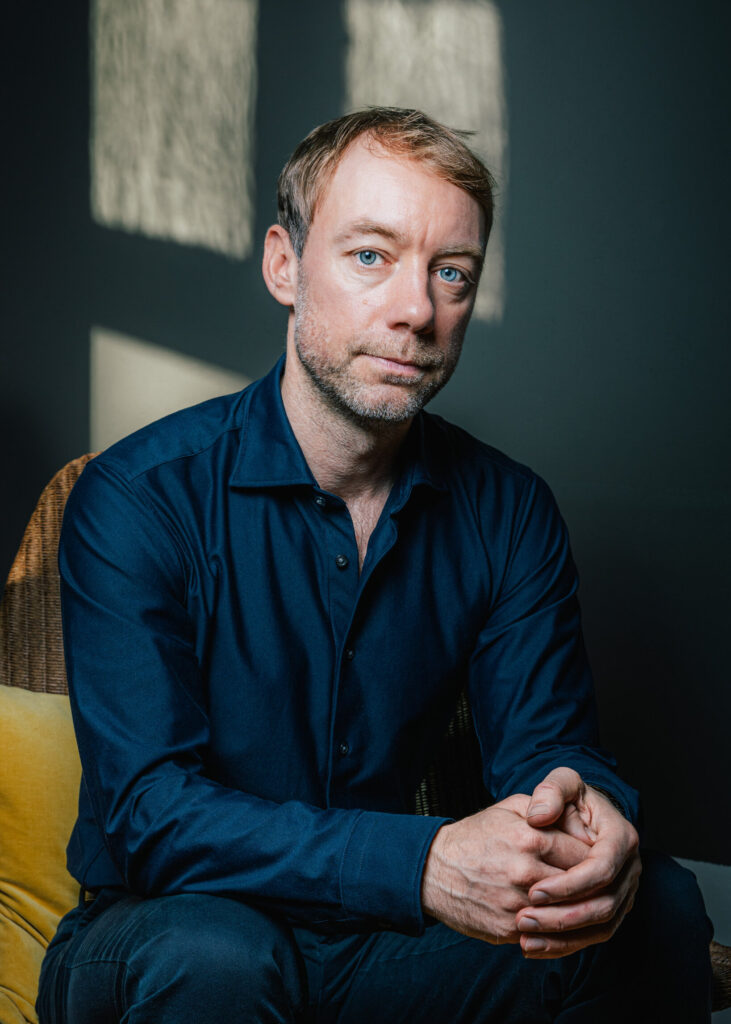
Dr. Johannes Hillje est consultant indépendant en communication politique, basé à Berlin et Bruxelles. Il conseille ministères, partis, responsables politiques, entreprises et organisations dans le domaine de la communication stratégique. Commentateur régulier de la vie politique allemande dans les médias, il est l’auteur de plusieurs ouvrages sur le populisme et la communication politique. Il est titulaire d’un doctorat en science politique et d’un master en politique et communication de la London School of Economics and Political Science (LSE).
Nikola Tulechki
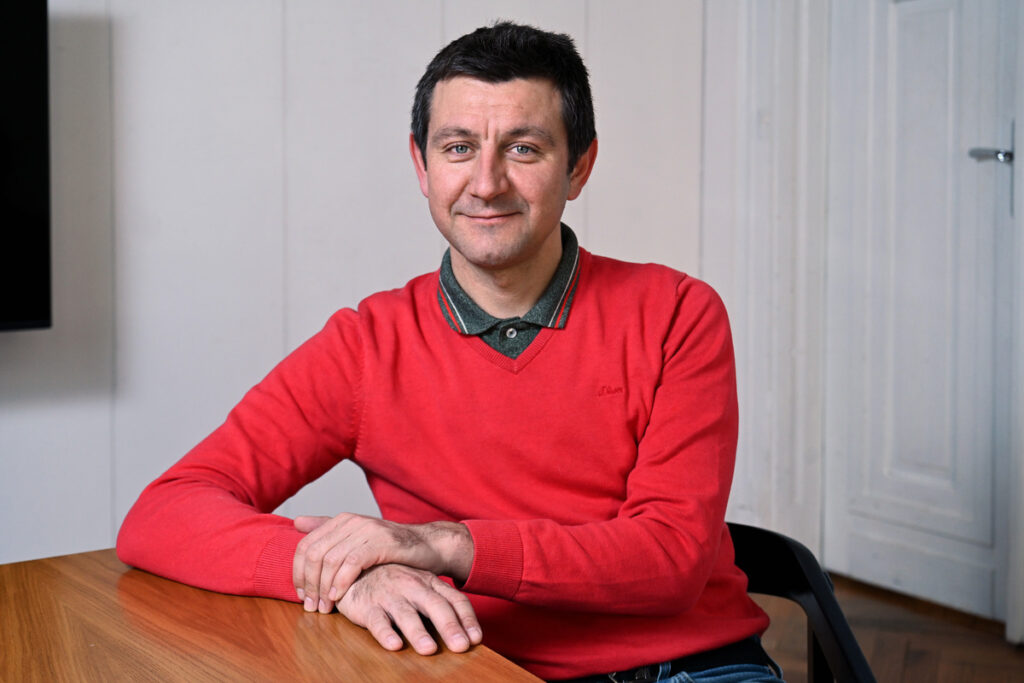
Nikola Tulechki est data scientist et ingénieur des connaissances, titulaire d’un doctorat en traitement automatique des langues de l’Université Toulouse 2. Il a cofondé l’association Data for Good Bulgaria, à travers laquelle il accompagne des organisations de la société civile et des médias dans l’analyse et la visualisation de données électorales et politiques. Il a travaillé comme consultant en données pour la plateforme de vérification des faits Factcheck.bg et s’intéresse aux comportements inauthentiques coordonnés ainsi qu’aux réseaux organisés d’influence et de désinformation dans l’espace public bulgare. Ingénieur des connaissances chez Ontotext/Graphwise depuis 2017, il enseigne également les technologies sémantiques à la New Bulgarian University.
Maya Dimitrova
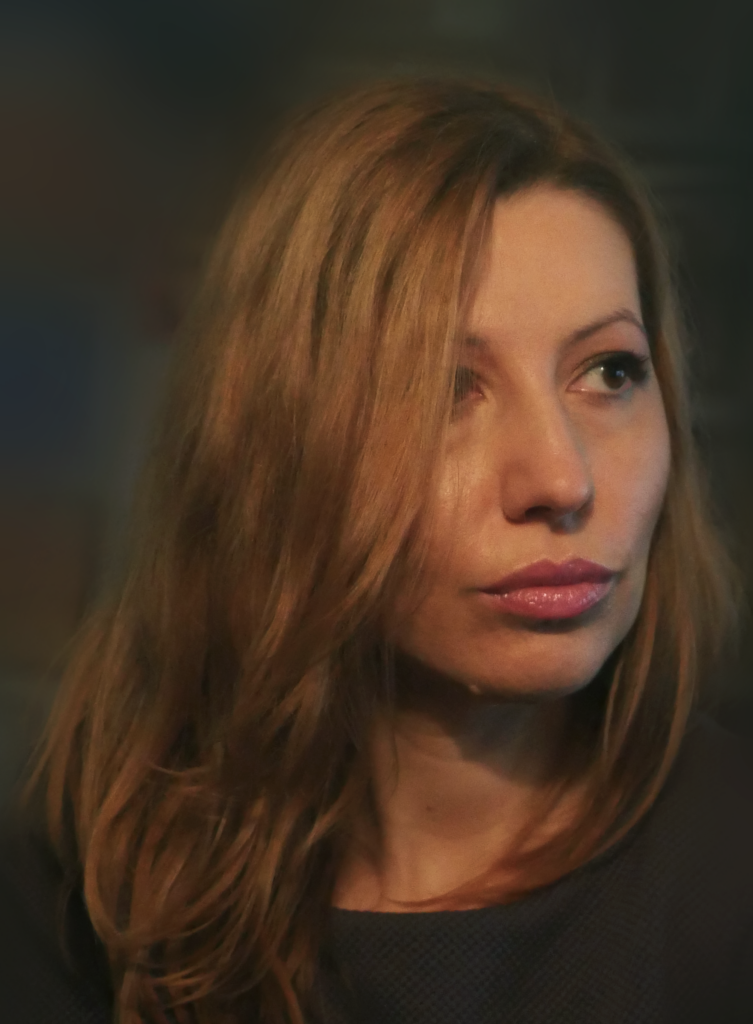
Maya Dimitrova est journaliste d’investigation, présentatrice et fact-checker. Elle fait partie de l’équipe de vérification des faits de la Télévision nationale bulgare (BNT) créée dans le cadre du projet BROD. Journaliste à la BNT depuis 2000, elle a présenté l’émission d’investigation Cas privé (Частен случай) de 2001 à 2014.
Elle a participé au programme Digital Sherlocks de l’Atlantic Council’s Digital Forensic Research Lab (DFRLab) en 2023.
Son travail journalistique s’est vu décerner de nombreux prix, dont le Grand Prix du Festival média européen bulgare (2014), le Prix Radostina Konstantinova pour le journalisme d’investigation (2019), et le Grand Prix dans la catégorie « Technologies et innovations » du concours Web Report 2024 de DIR.BG pour son enquête sur le marché noir de la publicité politique. Elle est l’auteure du documentaire Architectes du chaos, consacré aux réseaux de désinformation, pour lequel elle a reçu en 2025 le Prix Valya Krushkina dans la catégorie journaliste des médias électroniques et le Prix Red Line dans la catégorie État de droit, décerné par le Fonds anti-corruption.
Mimi Shishkova-Petrova (modératrice)
Mimi Shishkova-Petrova a une formation en droit et en administration publique. Elle a étudié le droit à l’Université de Heidelberg et a passé une dizaine d’années en Allemagne, où elle a travaillé dans des institutions telles que l’Université de Heidelberg, l’Académie des sciences et le Marsilius-Kolleg, tout en étant également gérante d’une entreprise de services informatiques et web pour des commerces locaux. De retour en Bulgarie, elle a fondé avec son mari et associé une maison d’édition connue pour le jeu satirique pour adultes « Cards against Bulgarianness », fondé sur le commentaire social et politique dans un registre ludique et accessible. Au cours des deux dernières années, elle a constitué une communauté sur TikTok et Instagram à travers des vidéos mêlant humour et regard critique pour commenter la vie politique bulgare et expliquer les processus civiques. Elle est activement engagée dans la lutte contre la désinformation et œuvre à rendre les enjeux démocratiques accessibles au plus grand nombre.


Rossen Bossev
Rossen Bossev fait partie de l’équipe européenne d’investigation numérique et de vérification des faits de l’Agence France-Presse (AFP), où il travaille depuis 2021, et est correspondant de l’agence pour la Bulgarie depuis 2025. Avant de rejoindre l’AFP, il a travaillé pendant quinze ans comme journaliste d’investigation à l’hebdomadaire Capital, où il couvrait des sujets liés à la justice, aux institutions chargées de l’application de la loi et aux droits humains. Il a participé à l’enquête internationale Grand Theft Europe, du collectif médiatique allemand CORRECTIV (2019). Il est lauréat des prix Zlaten klyutch (2008, 2010), Chovek na godinata – journaliste (2012) et Valya Krushkina – médias imprimés (2015). Membre du conseil d’administration de l’Association des Journalistes Européens – Bulgarie (2017-2022) et du Fonds Anti-Corruption (2018-2022). Chargé de cours en investigation numérique dans les programmes de licence et de master à l’École de journalisme de Nice, France (2023/24 et 2024/25). Co-auteur du premier manuel de vérification des faits dans l’environnement numérique bulgare (2020) et de l’enquête « L’État KTB » (2017).
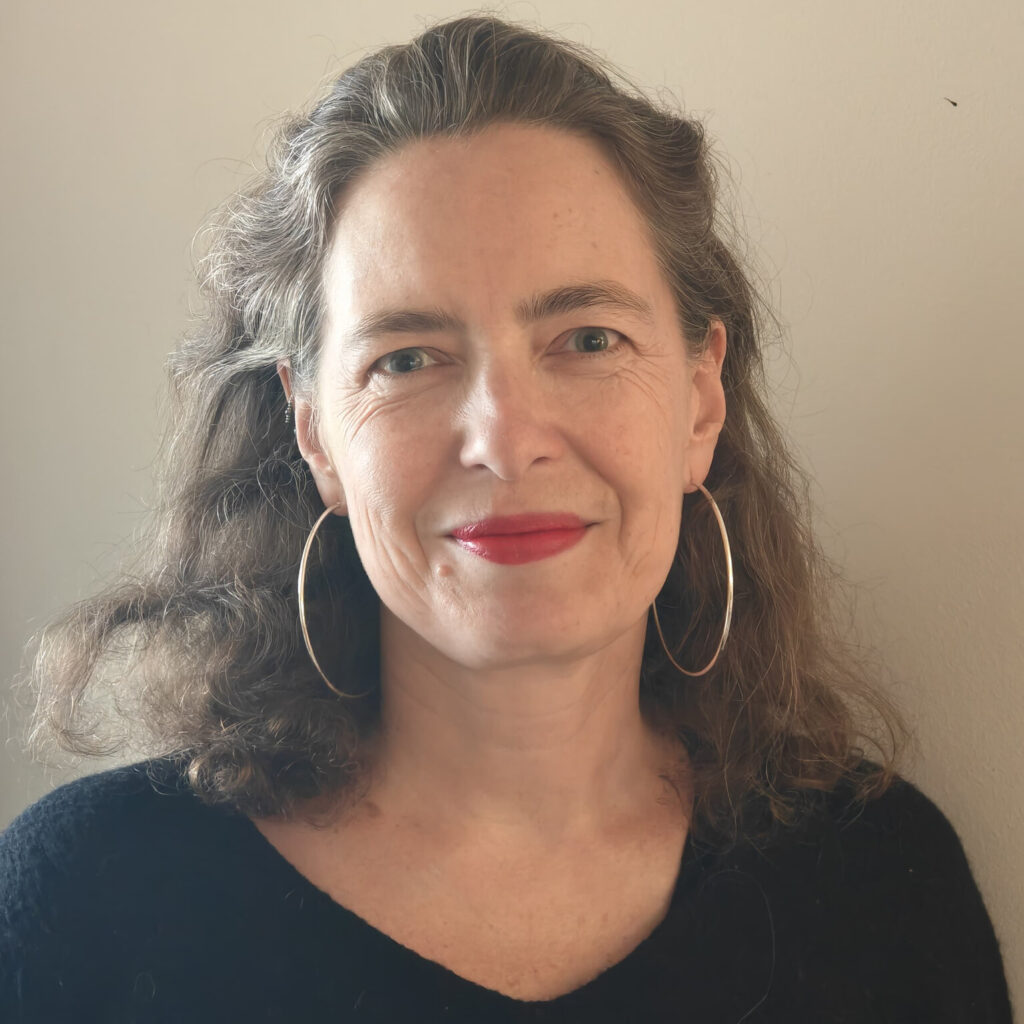
Isabelle Wirth
Journaliste à l’Agence France-Presse depuis 25 ans, Isabelle Wirth a travaillé au service photo, à la rédaction-en-chef et participe depuis trois ans à des projets européens de lutte contre la désinformation, comme l’Observatoire des médias numériques bulgaro-roumain BROD et le projet FEF-Mer noire avec les instituts français de Bulgarie et de Roumanie. Elle est actuellement élue au Conseil d’administration de l’Observatoire européen des médias numériques EDMO, dont BROD fait partie. Elle est également bénévole de l’association française d’éducation aux médias Entre les lignes.
Public round table – AI and political propaganda: tools, networks and influence
April 21, 6:00 pm,
Slaveykov hall Language: English
Admission – Free Registration: https://forms.gle/LPQBjRr5HQb6Fnnp9
The French Embassy, the Institut français de Bulgarie and the Embassy of the Federal Republic of Germany invite you to a round table devoted to the use of artificial intelligence in contemporary political propaganda.
At a time when synthetic content, amplification dynamics and influence strategies are reshaping the media landscape, making the information environment increasingly saturated, unstable and open to manipulation, this event will address several key questions: how is artificial intelligence transforming the forms and uses of political propaganda? How does such content circulate across networks and platforms? And what effects does it have on public debate?
The discussion will bring together political communication consultant Dr Johannes Hillje, data scientist Nikola Tulechki and investigative journalist Maya Dimitrova, under the moderation of Mimi Shishkova-Petrova.
To open the evening and broaden its perspectives, Maya Dimitrova’s new documentary will explore the growing place of artificial intelligence in certain contemporary forms of political communication and influence in her country. Rossen Bossev and Isabelle Wirth, from Agence France-Presse, will then present verification tools and techniques.
This event, open to all, is part of the regional project « Strengthening Democratic Media in the Black Sea Region », supported by the French Ministry for Europe and Foreign Affairs and implemented in partnership with Agence France-Presse (AFP), with the support of the Bulgarian-Romanian Digital Media Observatory BROD.
PARTICIPANTS :
Dr Johannes Hillje
Dr. Johannes Hillje works as an independent political and communications consultant in Berlin and Brussels. He advises ministries, parties, politicians, companies and organizations in the area of strategic communications. He is a regular commentator on German politics in the media and has published several books on populism and political communication. He holds a PhD in political science and an M.Sc. in Politics and Communications from the London School of Economics and Political Science (LSE).
Nikola Tulechki
Nikola Tulechki is a data scientist and knowledge engineer, with a PhD in natural language processing from the University of Toulouse 2. He co-founded the association Data for Good Bulgaria, through which he supports civil society and media organisations in the analysis and visualisation of electoral and political data. He has worked as a data consultant for the fact-checking platform Factcheck.bg and focuses on coordinated inauthentic behaviour and organised networks of influence and disinformation in the Bulgarian public sphere. A knowledge engineer at Ontotext/Graphwise since 2017, he also teaches semantic technologies at New Bulgarian University.
Maya Dimitrova
Maya Dimitrova is an investigative journalist, presenter and fact-checker. She is part of the fact-checking team at Bulgarian National Television (BNT), established under the BROD project. A journalist at BNT since 2000, she hosted the investigative programme Private Case (Частен случай) from 2001 to 2014.
She participated in the Digital Sherlocks programme of the Atlantic Council’s Digital Forensic Research Lab (DFRLab) in 2023.
Her journalistic work has received numerous awards, including the Grand Prix at the Bulgarian European Media Festival (2014), the Radostina Konstantinova Award for Investigative Journalism (2019), and the Grand Prix in the « Technology and Innovation » category at the DIR.BG Web Report 2024 competition for her investigation into the black market of political advertising. She is the author of the documentary Architects of Chaos, which investigates disinformation networks, for which she received the Valya Krushkina Award for Electronic Media Journalist and the Red Line Award in the Rule of Law category from the Anti-Corruption Fund in 2025.
Mimi Shishkova-Petrova (moderator)
Mimi Shishkova-Petrova has a background in law and public administration. She studied law at the University of Heidelberg and spent around a decade in Germany where she worked in academic institutions such as the University of Heidelberg, the Academy of Sciences and the Marsillius-Kolleg while also as a small business-owner providing IT and web services for small local business owners. After returning to Bulgaria and starting a family, together with her husband and business-partner she founded a small publishing company most famous for the adult satirical board game « Cards against bulgarianness » which relies on social and political commentary in a fun and accessible way. In the past two years she has built a following on TikTok and Instagram through videos using humour and social critique to comment on Bulgarian political life and explain civic processes. She is actively involved in the fight against disinformation and works to make democratic issues accessible to a broad audience.
Rossen Bossev
Rossen Bossev is part of the European digital investigation and fact-checking team at Agence France-Presse (AFP), where he has worked since 2021, and has been the agency’s correspondent for Bulgaria since 2025. Before joining AFP, he worked for fifteen years as an investigative journalist at the weekly newspaper Capital, covering justice, law enforcement institutions and human rights. He participated in the international investigation Grand Theft Europe by the German media collective CORRECTIV (2019). He is the recipient of the Zlaten klyutch awards (2008, 2010), Chovek na godinata – journalist (2012) and Valya Krushkina – print media (2015). He served on the board of the Association of European Journalists – Bulgaria (2017-2022) and the Anti-Corruption Fund (2018-2022). He has been a lecturer in digital investigation in undergraduate and graduate programmes at the Nice School of Journalism, France (2023/24 and 2024/25). He is co-author of the first fact-checking manual in the Bulgarian digital environment (2020) and of the investigation « The KTB State » (2017).
Isabelle Wirth
A journalist at Agence France-Presse for 25 years, Isabelle Wirth has worked in the photo department and in the editorial office, and has been involved for three years in European projects to combat disinformation, including the Bulgarian-Romanian Digital Media Observatory BROD and the FEF-Black Sea project with the French Institutes in Bulgaria and Romania. She currently serves on the board of the European Digital Media Observatory EDMO, of which BROD is a member. She is also a volunteer with the French media literacy association Entre les lignes.